Interpretive Signage for Belo Horizonte













The role of urban signage in the preservation of cultural heritage
Urban ensembles are areas of the city defined with the objective of protecting polarizing spaces, where environments, buildings, or even sets of buildings that present expressive cultural significance are found.
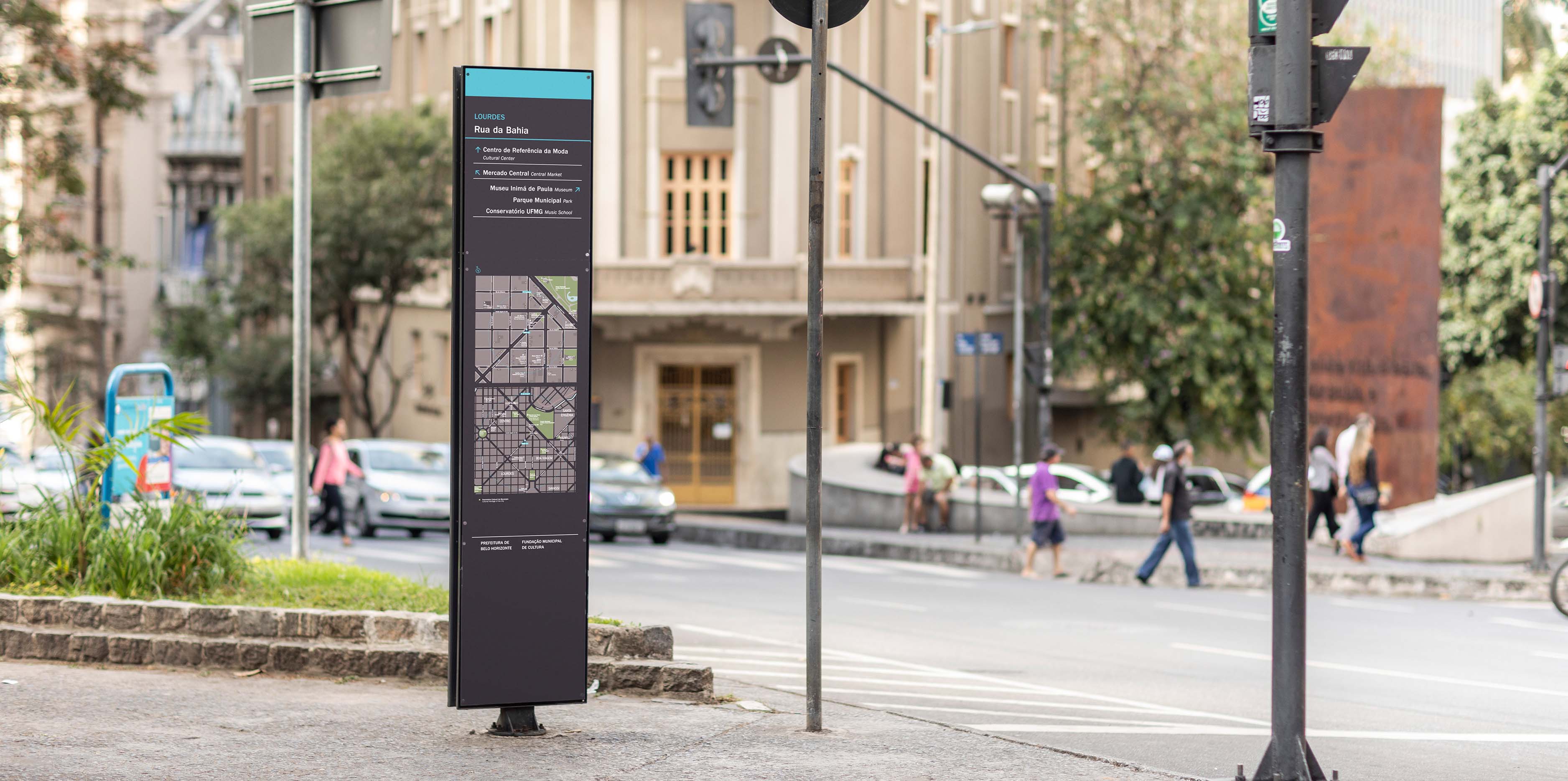
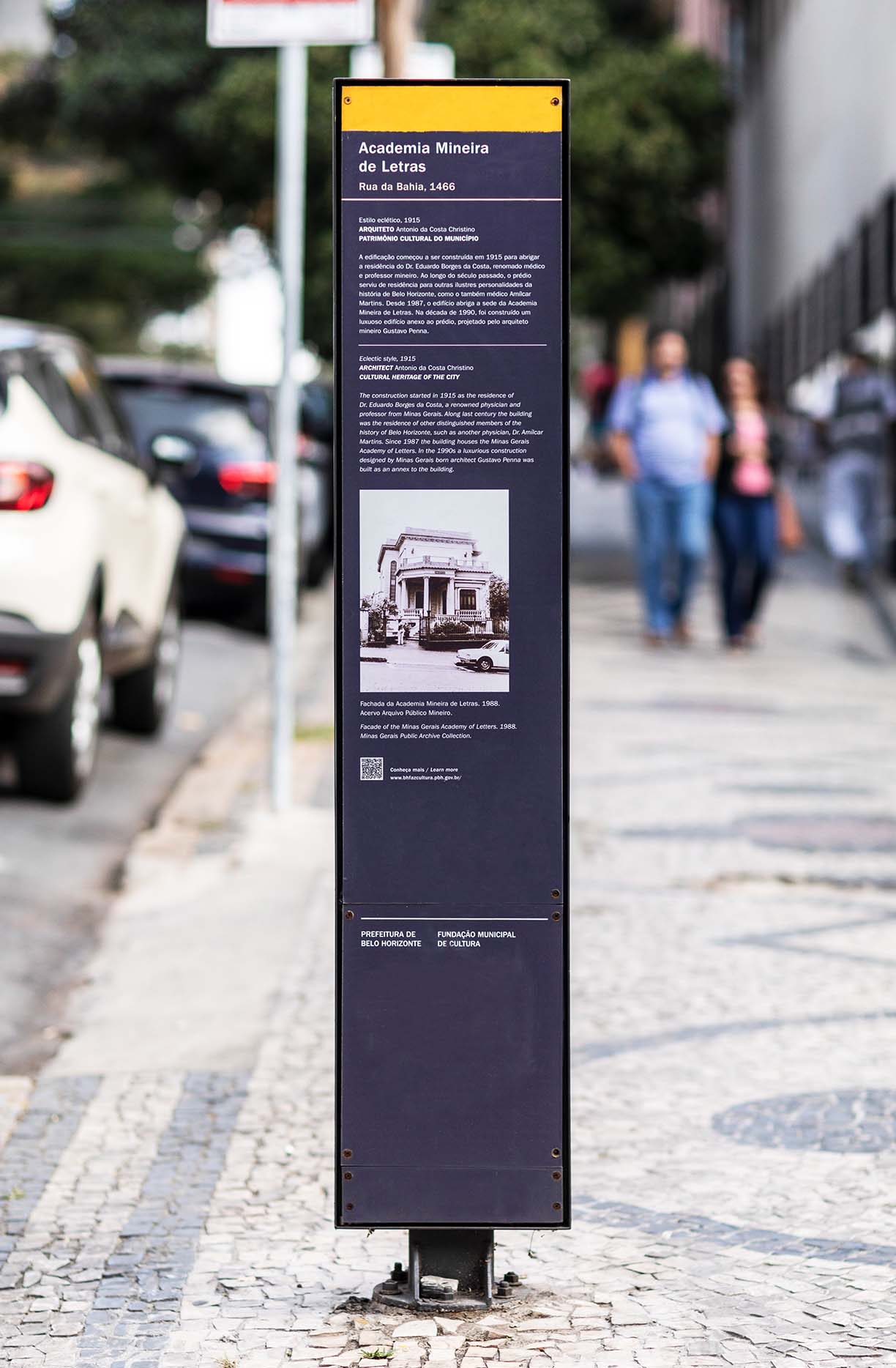
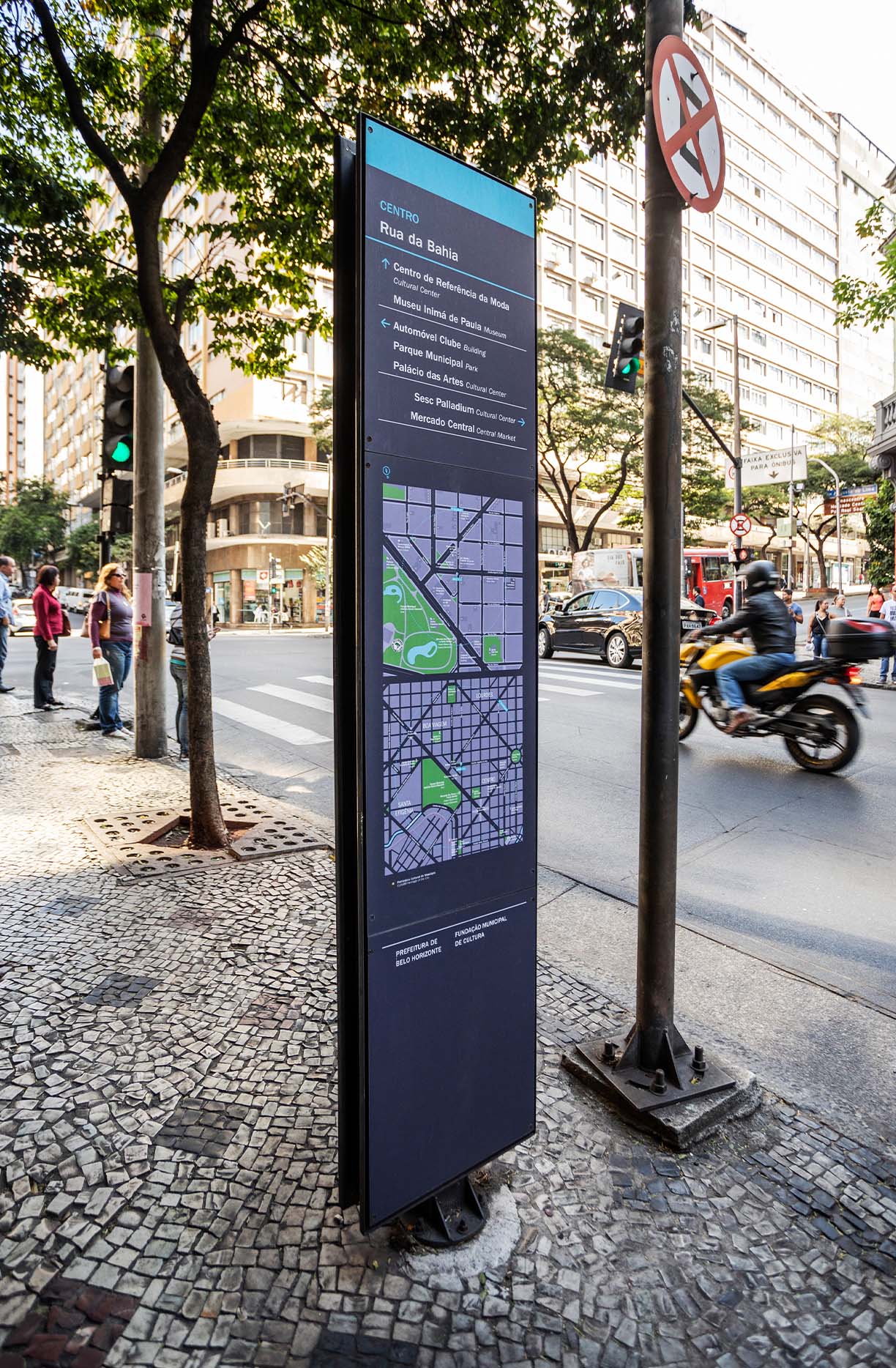
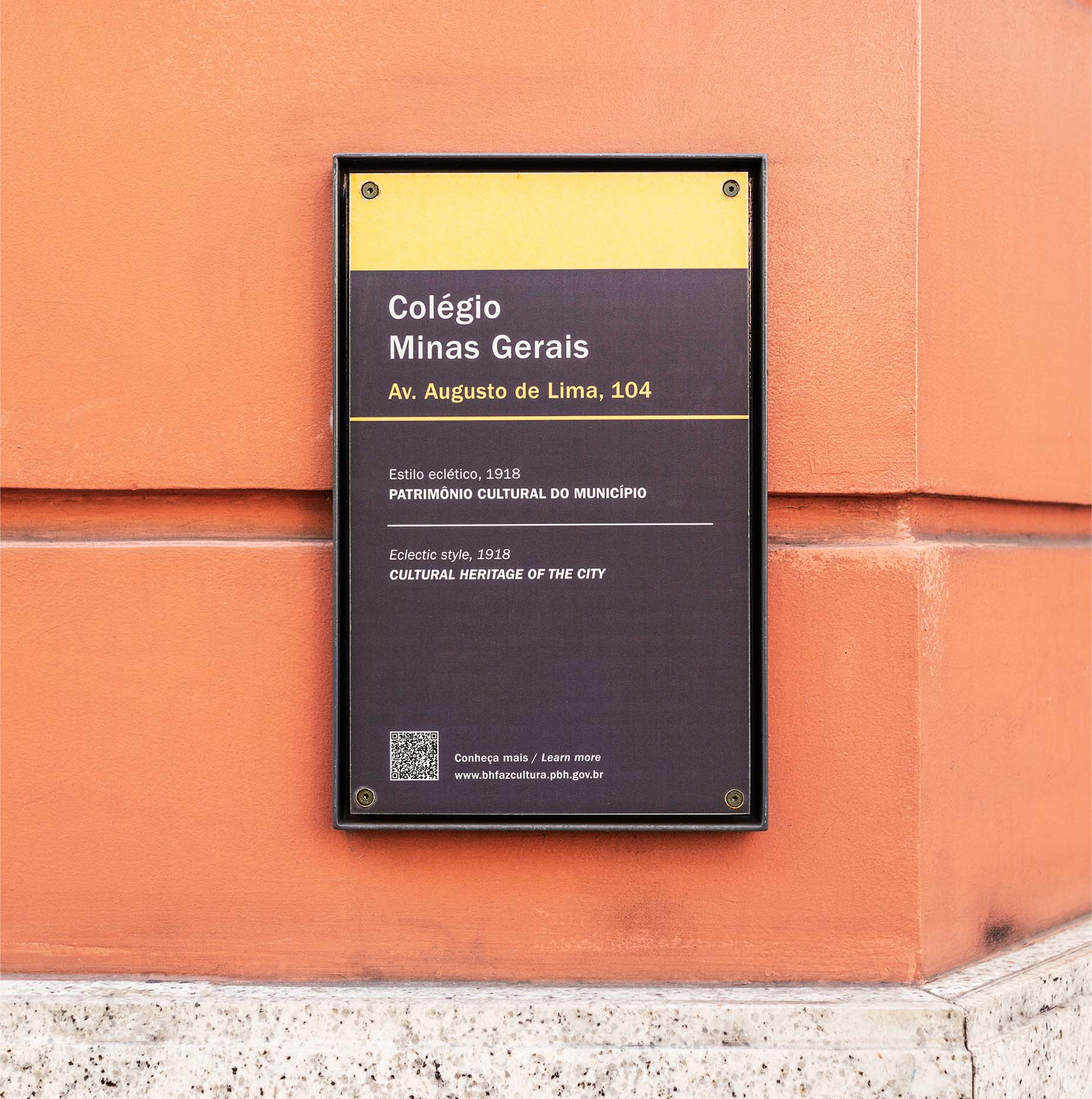
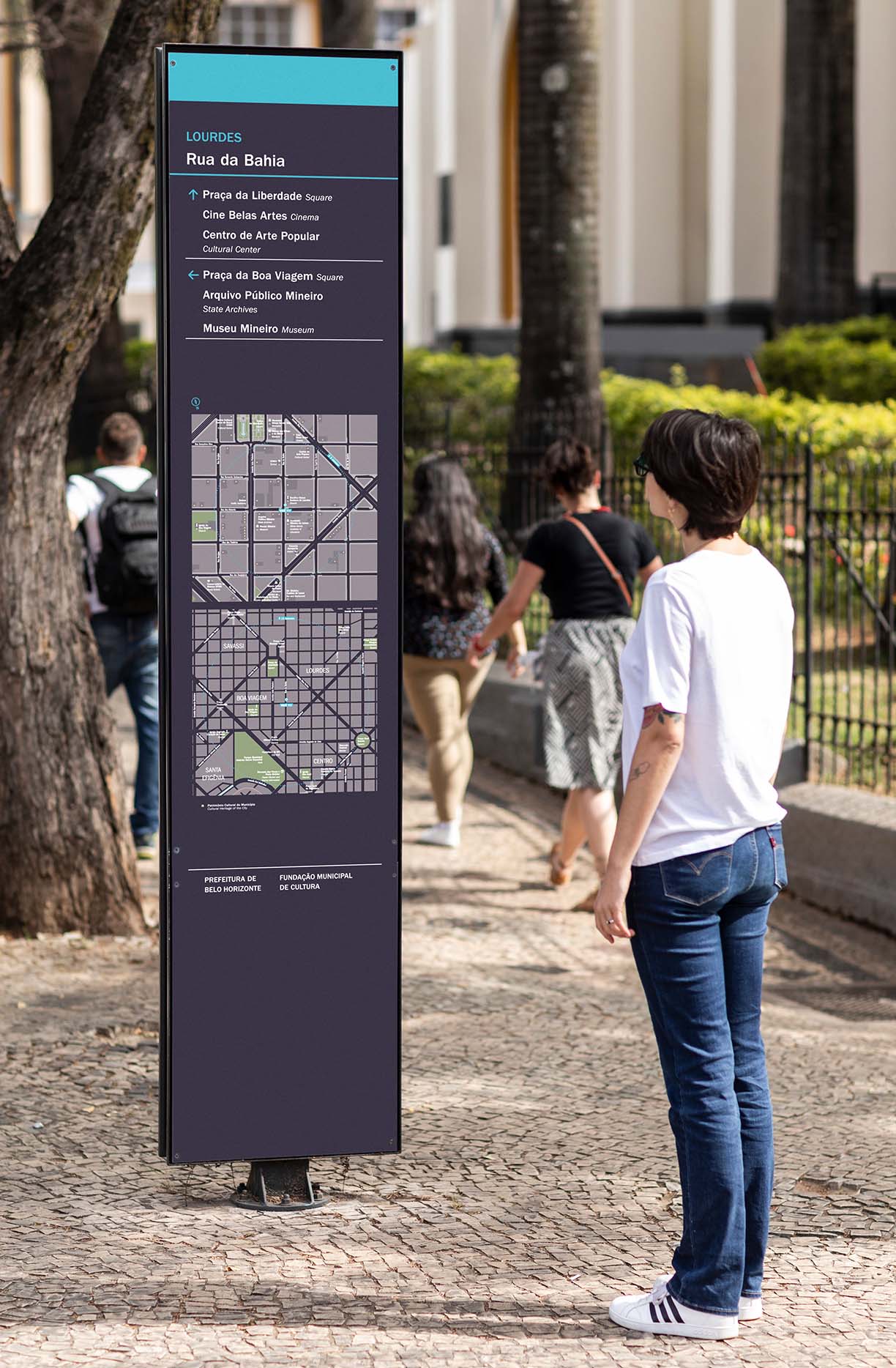
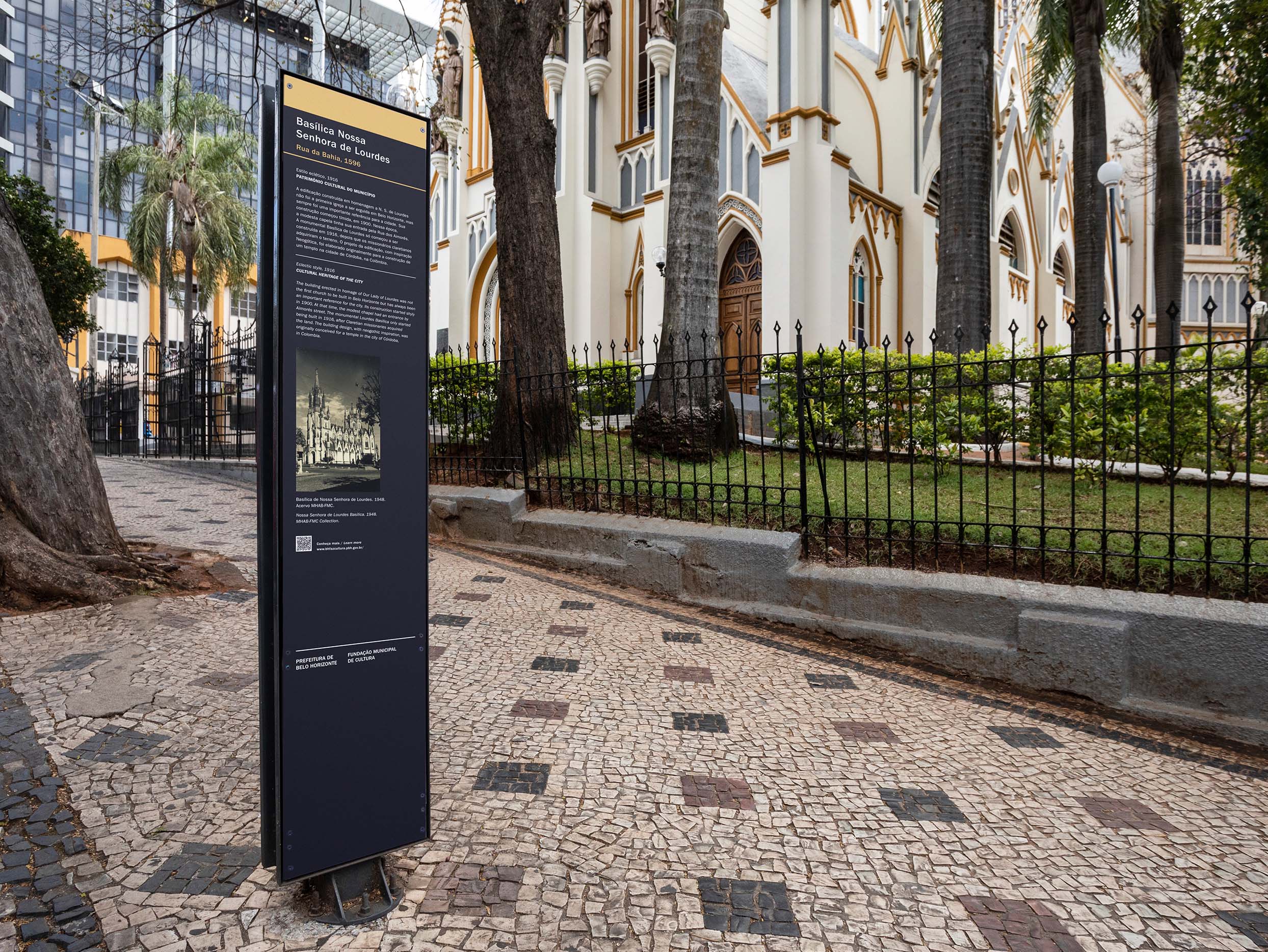
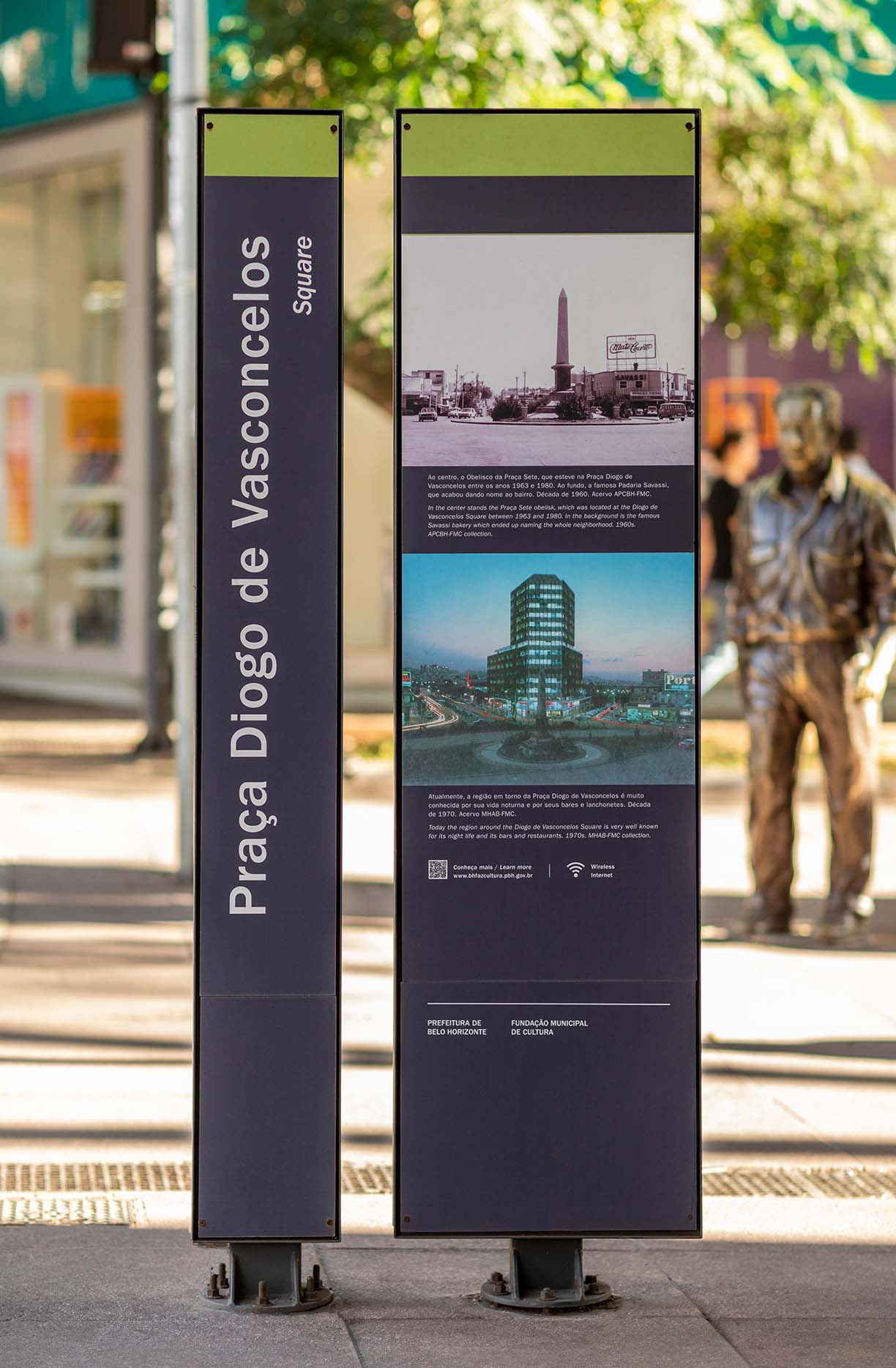
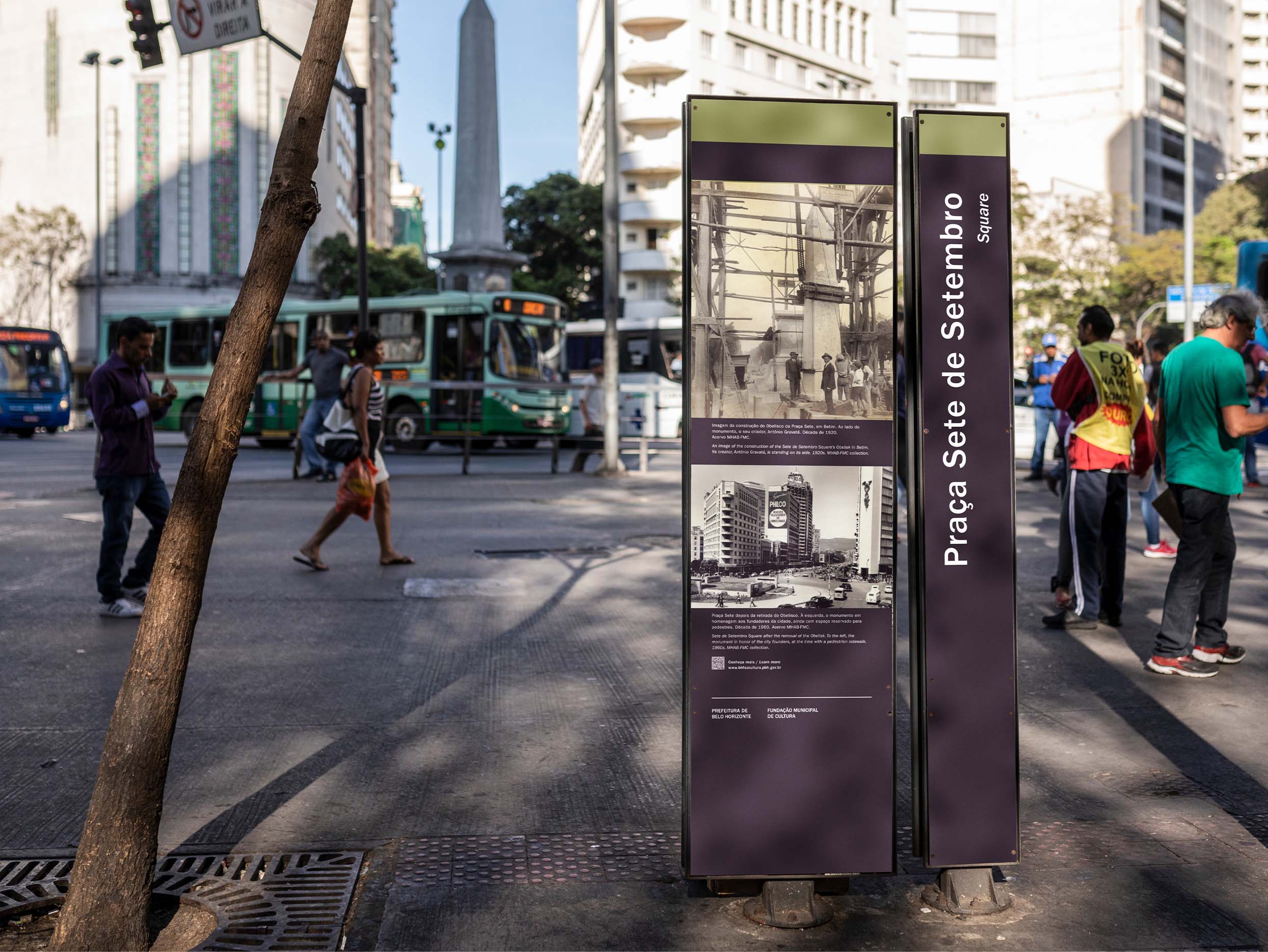
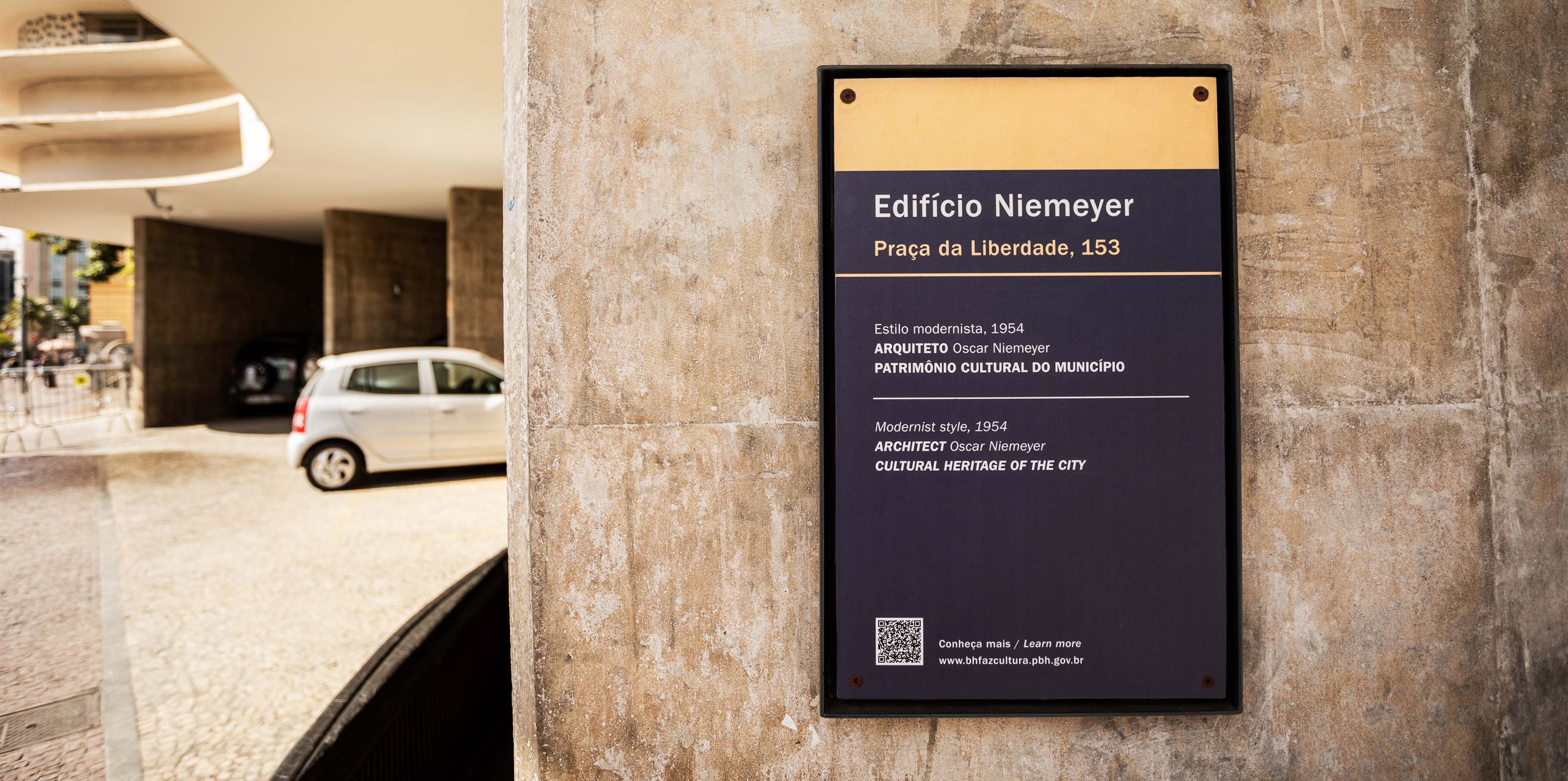
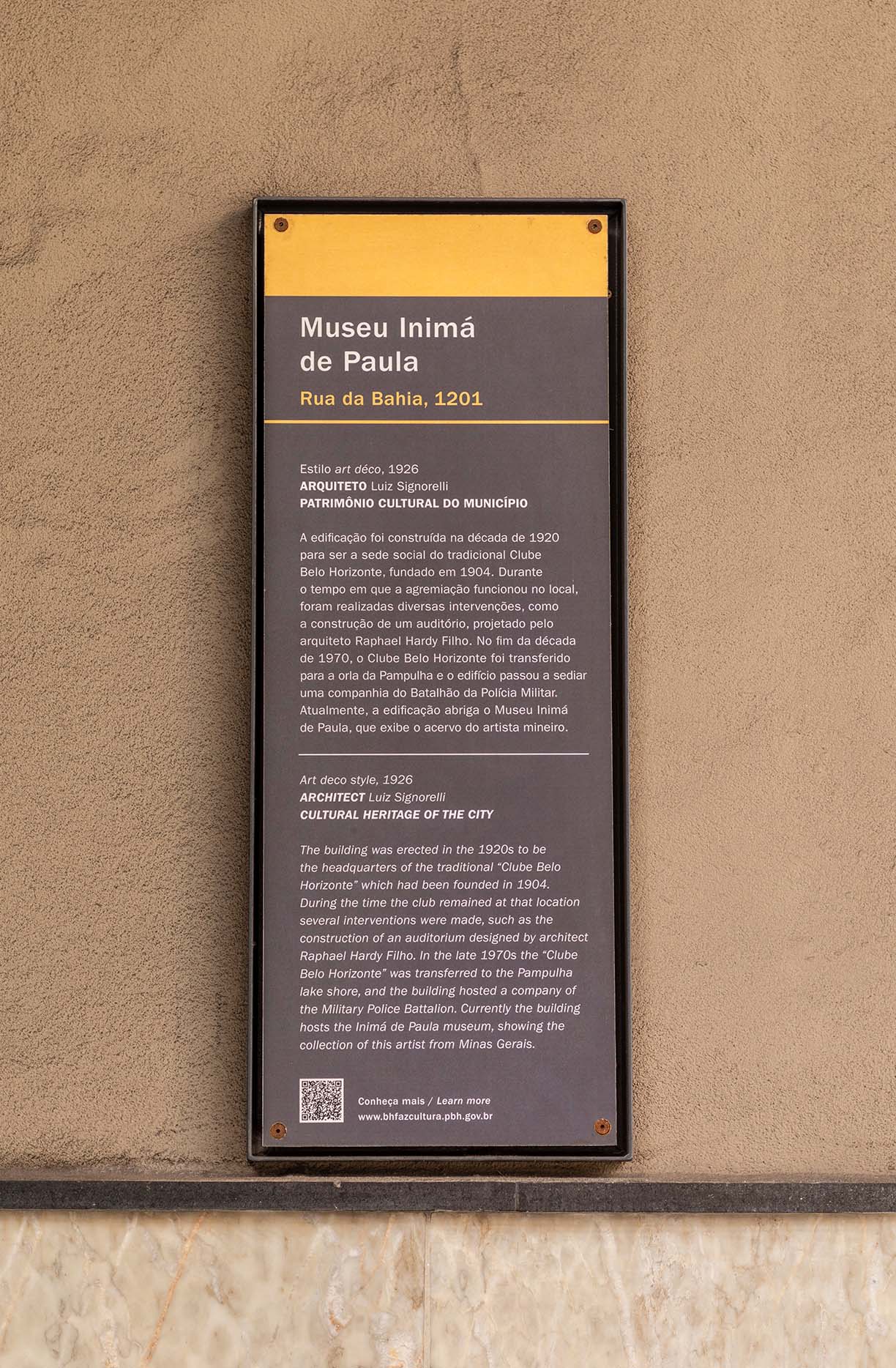
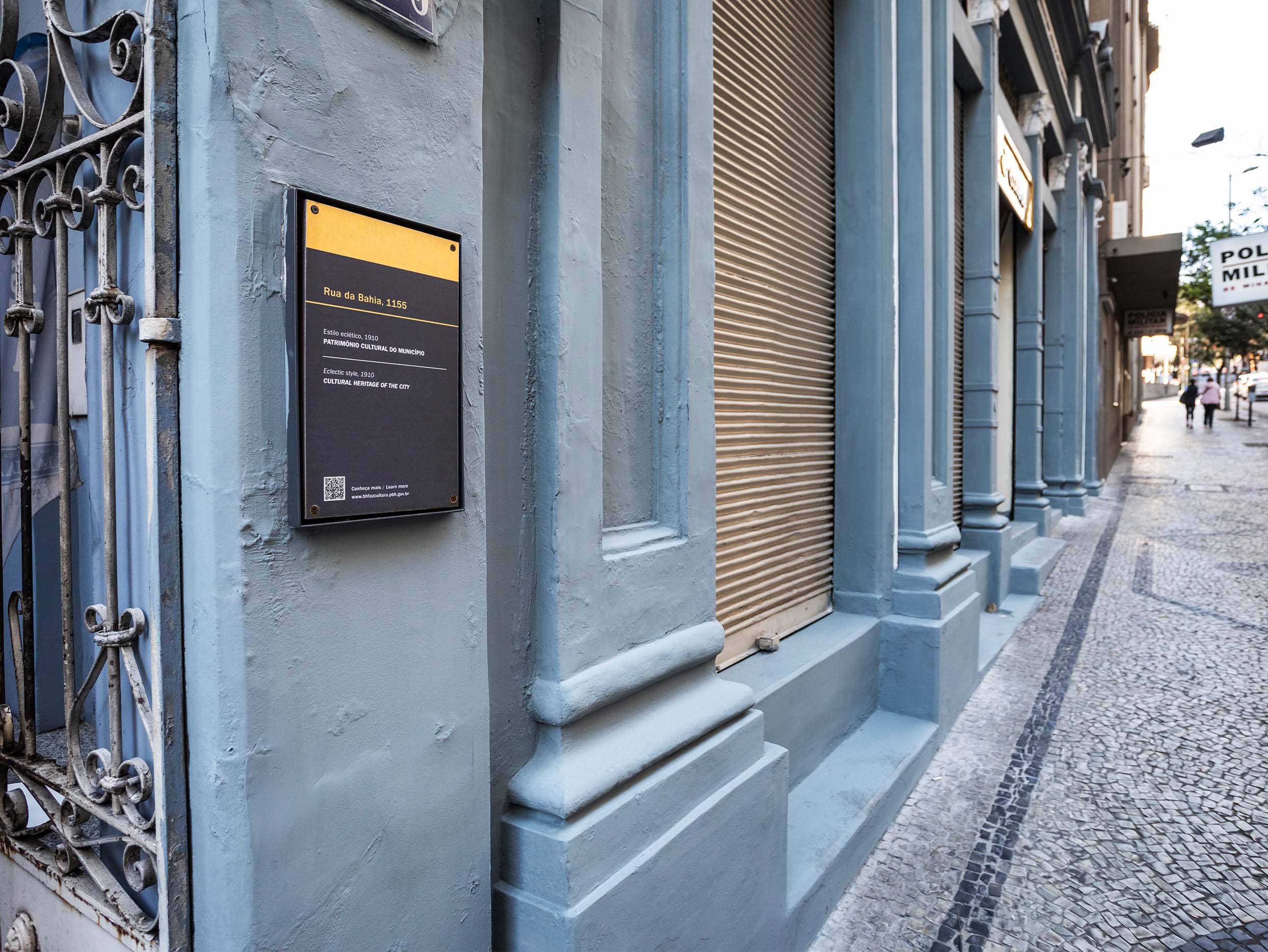
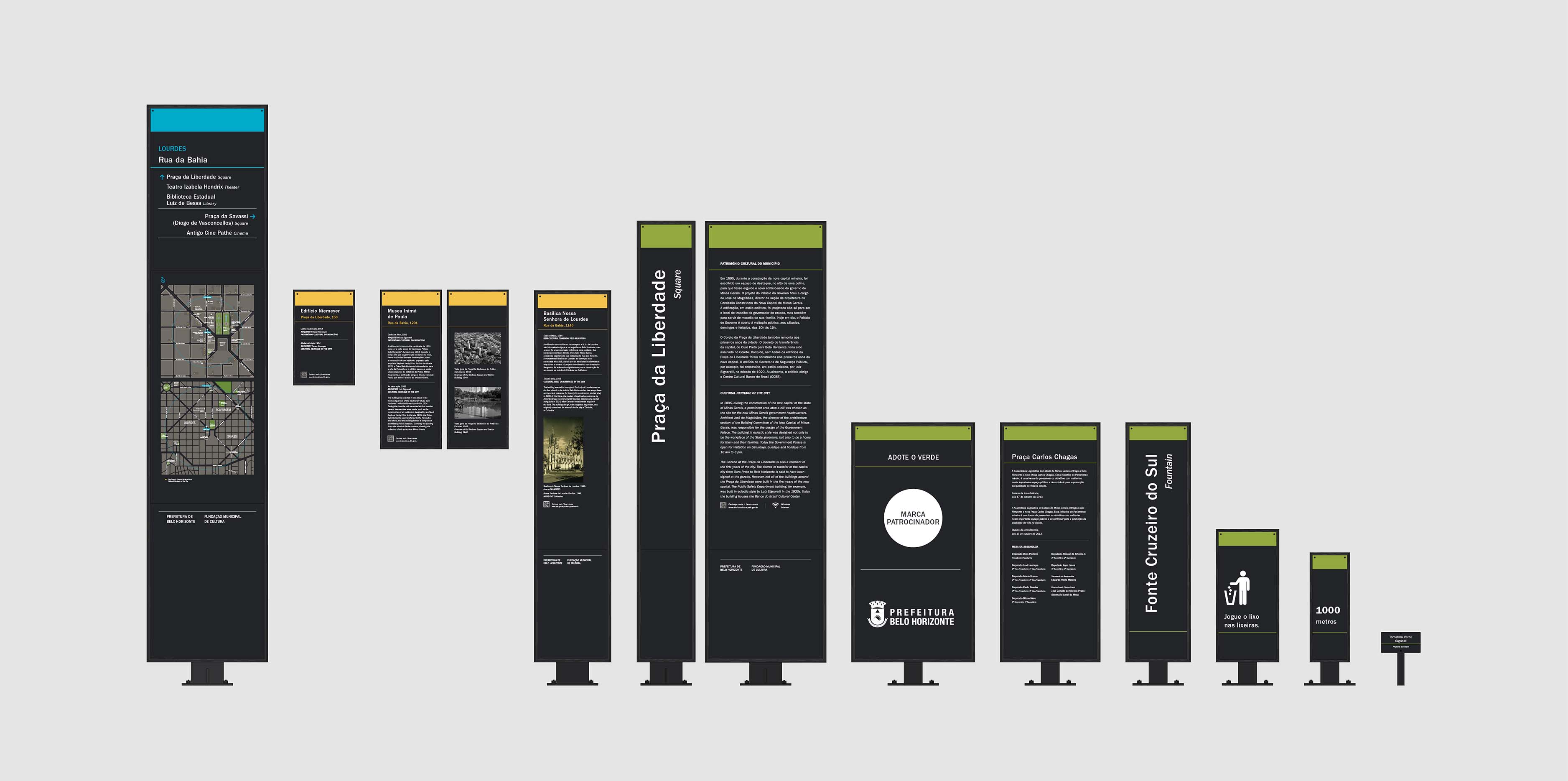
Within the scope of the interpretive signage project for Belo Horizonte, the installation of interpretive and indicative signs was planned along three urban ensembles of the capital: Rua da Bahia, Praça Rui Barbosa, and Praça da Liberdade. In addition to having an educational function, the work sought to assist in the displacement of people, integrating the user, especially the tourist, into the urban context.
From a well-defined color palette, each set of signs was divided between sidewalks, blocks, points of interest, listed properties, directional signs, squares and parks, and lakes and rivers. In addition to texts and photographs, which help to provide information about the history of Belo Horizonte, its occupation process, and its most representative architectural examples, we also used pictograms, which contribute to the representation of spaces and the integration of people into the region.
- Creative Direction: Mariana Hardy
- Executive Direction: Cynthia Massote
- Coordination: Gustavo Magno
- Designers: Luciana Guizan, Emerson Eler, Thais Bara, Delio Faleiro, Paula Vilela
- Project Manager: Marcela Dantés e Nathalia Massote
- Graphic Production: Mirelle Bairral
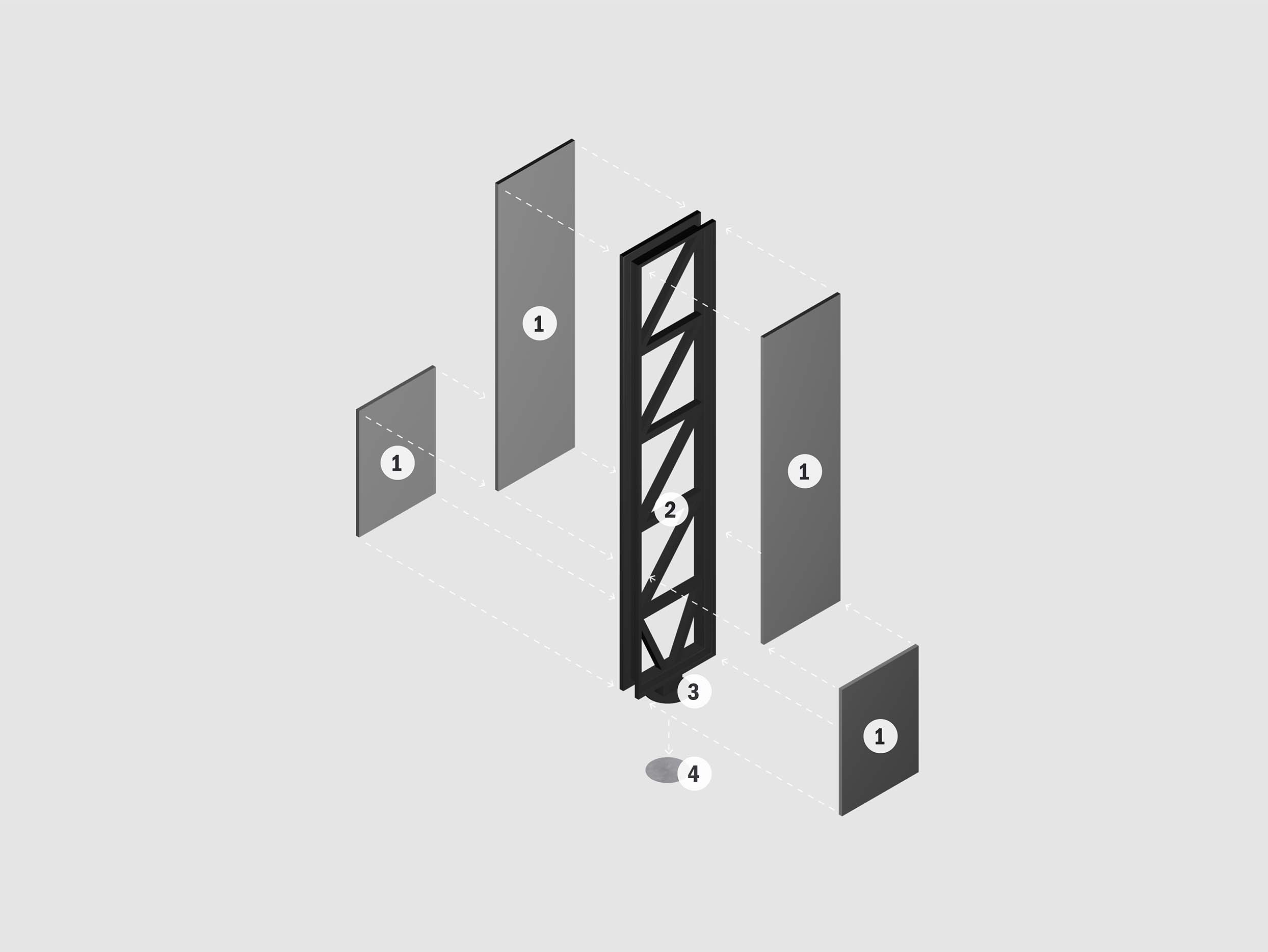
- Structural Project: Mach Arquitetos (Fernando Maculan e Mariza Machado Coelho)
- Photography: Rafael Motta